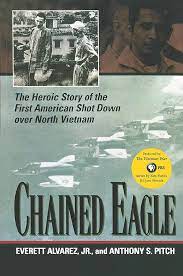
On August 5, 1964, while Lt. (jg) Everett Alvarez was flying a retaliatory air strike against naval targets in North Vietnam, antiaircraft fire crippled his A-4 fighter-bomber, forcing him to eject over water at low altitude. Alvarez relates the engrossing tale of his capture by fishermen, brutal treatment by the North Vietnamese, physical and mental endurance, and triumphant repatriation nearly nine years later in 1973. Alvarez spent more time as a prisoner of war in Vietnam than any other flier. As Senator John McCain, a fellow POW, has written, “During his captivity, Ev exhibited a courage, compassion, and indomitable will that was an inspiration to us all.” Indeed, the book, which was written with Anthony S. Pitch, is remarkable for its lack of rancor. Alvarez directs his strongest words against the small number of POWs who broke ranks and collaborated with the enemy. As one reviewer wrote, Alvarez “relates the misery of his condition with a detachment that robs it of its shock value.” Chained Eagle also tells the story of the Alvarez family’s ordeal during his years of imprisonment: His sister became an anitwar activist, his wife divorced him, and relatives died. Yet throughout his time as a prisoner of war, Alvarez remained duty-bound and held steadfast to his religious faith and the values enshrined in the U.S. Constitution.


Missing in Action: Trail of Deceit
The US Governments failure to find captured serviceman from the Vietnam War Post Views: 552


