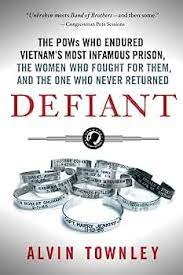
During the Vietnam War, hundreds of American prisoners-of-war faced years of brutal conditions and horrific torture at the hands of North Vietnamese guards and interrogators who ruthlessly plied them for military intelligence and propaganda. Determined to maintain their Code of Conduct, the POWs developed a powerful underground resistance. To quash it, their captors singled out its eleven leaders, Vietnam’s own “dirty dozen,” and banished them to an isolated jail that would become known as Alcatraz. None would leave its solitary cells and interrogation rooms unscathed; one would never return.
As these eleven men suffered in Hanoi, their wives at home launched an extraordinary campaign that would ultimately spark the nationwide POW/MIA movement. The members of these military families banded together and showed the courage not only to endure years of doubt about the fate of their husbands and fathers, but to bravely fight for their safe return. When the survivors of Alcatraz finally came home, one veteran would go on to receive the Medal of Honor, another would become a U.S. Senator, and a third still serves in the U.S. Congress.