
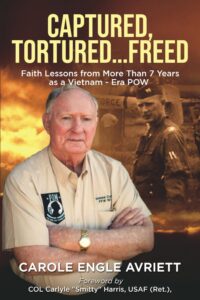
Captured, Tortured … Freed: Faith Lessons from More Than 7 Years as a Vietnam-Era POW

When everything you hold dear is suddenly stripped away, where do you turn?

IN 1965, USAF COL Thomas “Jerry” Curtis’s rescue helicopter was shot down over North Vietnam. He was immediately captured and spent the better part of 71/2 years confined in filthy cells throughout the notorious Hanoi prison camps. Thousands of miles from home and unable to communicate with his wife and children, Jerry endured months of solitary confinement, suffocating heat, freezing cold, grueling physical and psychological torture, constant hunger, and unimaginable mental distress. Yet, time and again, the Light that darkness cannot overcome became his beacon of hope, reminding him that no matter how dire the circumstances, there are some things that can never be taken away.

Now, for the first time in print, Jerry shares the full story of his 2,703 days in captivity and what he learned about faith, hope, and the indomitable power of the human spirit.

Other Books You Might Be Interested In

The Jack Van Loan Story: In His Own Words

Jack Van Loan was a United States Air Force fighter pilot. In 1967, he was flying as wingman for Colonel Robin Olds when his F-4 Phantom jet was shot down. He spent six years as a prisoner of war in North Vietnam. Alongside such legends as Robbie Risner, James Stockdale,

Read More »

“Aid and Comfort”: Jane Fonda in North Vietnam

Jane Fonda’s visit to Hanoi in July 1972 and her pro-North Vietnamese, anti-American conduct, especially her pose with an anti-aircraft gun used to shoot down American planes and her propaganda broadcasts directed toward American troops, angered many Americans. In their eyes, she was guilty of treason, but she was never

Read More »

Traumatic Defeat: POWs, MIAs, and National Mythmaking

War breeds myths, especially those made up by the vanquished to explain or soften their loss. Occasionally the myths of the defeated center on prisoners of war (POWs) and those missing in action (MIAs) to justify the lost struggle, mute national guilt, and sometimes even reject the reality of defeat

Read More »

Contact Us